Omaha City Council Considers Minimum Wage Above State Standard
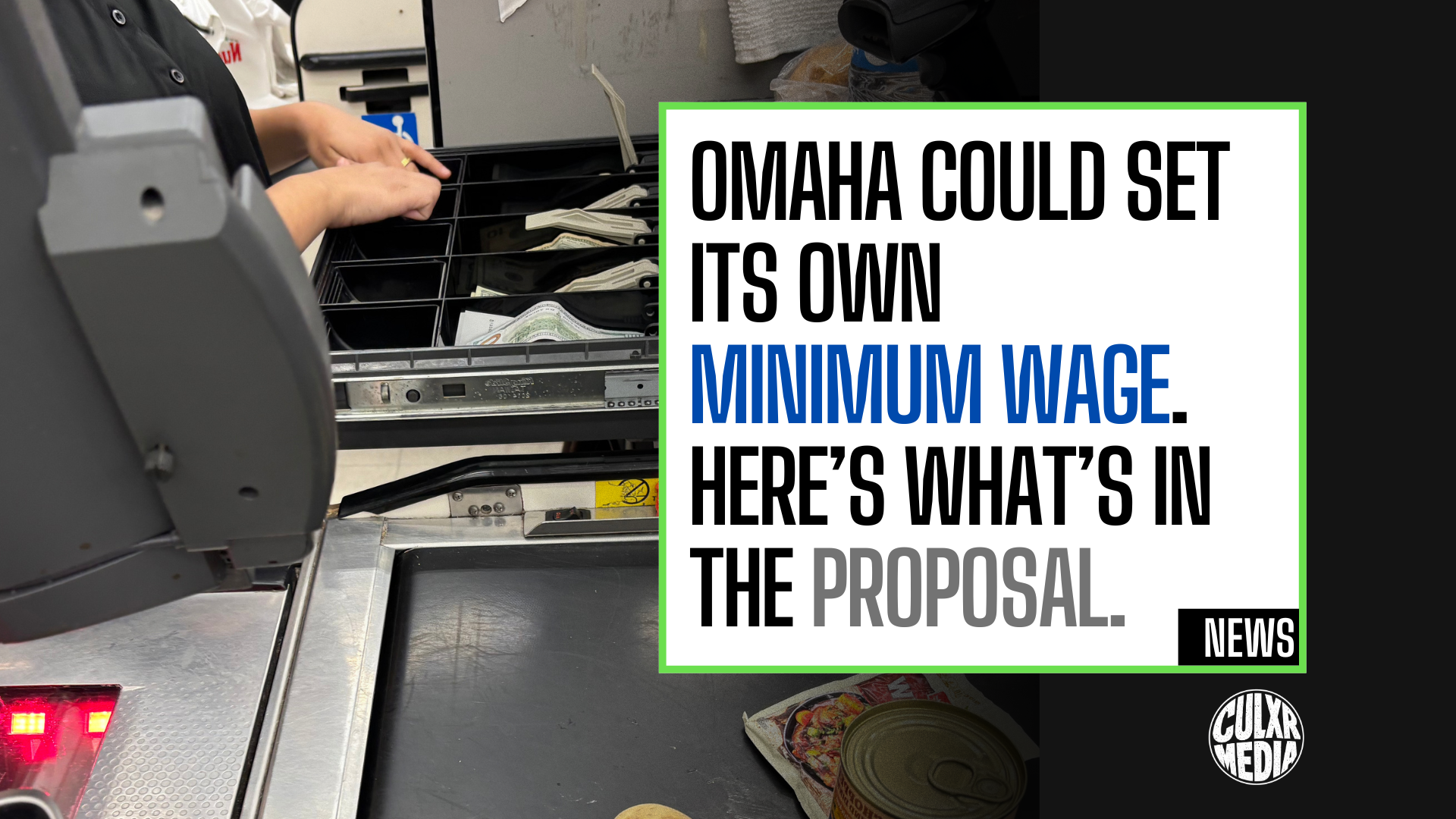
Omaha Could Set Its Own Minimum Wage. Here’s What’s in the Proposal.
By Luis E. Jimenez
June 15, 2026
OMAHA, Nebraska — A proposed Omaha City Council ordinance would establish a city-specific minimum wage of $15.00 per hour for employees working within Omaha's geographic boundaries, beginning October 1, 2026. The measure, requested by Council President Danny Begley and transmitted by City Attorney Matthew Kuhse, would also create a new chapter of Omaha's municipal code governing minimum wage standards, annual adjustments, enforcement procedures, and worker protections. Supporters of the proposal argue that Omaha's higher housing, transportation, childcare, healthcare, and consumer costs justify a local wage standard that reflects the city's economic conditions rather than relying solely on statewide minimum wage requirements.
Nebraska voters twice approved higher minimum wages at the ballot box, in 2014 and again in 2022. The 2022 measure guaranteed a path to $15 an hour and future increases tied to inflation. In 2026, the Legislature, with support of Governor Jim Pillen, revised that law, creating a lower wage for some younger workers and limiting future increases to 1.75% annually. The resulting debate has become a test of both economic policy and the role of voter-approved initiatives in Nebraska government. In May 2026, the Lincoln City Council voted to override the state's cap, maintaining a flat $15.00 per hour minimum and preserving higher cost-of-living increases.
Under Omaha’s proposal, the $15.00 minimum wage would increase annually beginning January 1, 2027, based on changes in the Consumer Price Index for All Urban Consumers (CPI-U) for the Midwest Region. The ordinance would apply to most employers and employees performing work within Omaha city limits, including businesses headquartered outside the city if employees work in Omaha. Certain categories would remain exempt, including agricultural workers, some professional and supervisory employees, government workers, volunteers, apprentices, and several other classifications already recognized under state law. Employers would be required to maintain payroll records for at least three years and post annual notices informing workers of wage rates and their rights under the ordinance.
The proposal would assign enforcement responsibilities to Omaha's Human Rights and Relations Department, which would investigate complaints, require payment of unpaid wages when violations occur, and assess penalties of up to $500 per violation. The ordinance also prohibits retaliation against workers who file complaints or report violations and provides avenues for appeals and settlements.
Public Welcomed to Give Comment Tuesday (June 16)
As the City Council considers the measure, residents commented during June 16 public hearing before the council. Public testimony covered several key questions, including whether Omaha should establish a local minimum wage above state requirements, how annual cost-of-living adjustments should be calculated, the potential impacts on workers and employers, the scope of exemptions, and whether the proposed enforcement mechanisms strike an appropriate balance between compliance and accountability. The council will meet in the Legislative Chamber in the Omaha-Douglas Civic Center, 1819 Farnam Street, Downtown Omaha, most Tuesdays at 2:00 PM. After the public hearing, council members voted 7-0 to layover the vote to codify the ordinance to July 14.
Public Hearing before Omaha City Council, June 16. Video begins 41 minutes 19 seconds, at the start of Agenda Item #29, ordinance to establish a local minimum wage and enforcement mechanisms thereto.
Further Reading:
Nebraska’s Minimum Wage Fight
Nebraska’s modern minimum wage story really begins in 2014. That year, voters approved Initiative 425, raising the state’s minimum wage from the federal level of $7.25 to $8 in 2015 and $9 in 2016. The measure passed with nearly 60% of the vote, reflecting a bipartisan belief that wages had not kept pace with living costs. After reaching $9, however, the wage remained unchanged for six years.
By 2021 and 2022, rising housing, food, and transportation costs fueled a new movement called “Raise the Wage Nebraska.” Supporters gathered more than enough signatures to place Initiative 433 on the statewide ballot. The measure proposed raising the minimum wage gradually to $15 an hour by 2026 and then automatically adjusting it each year based on inflation so that workers would not lose purchasing power over time. In November 2022, Nebraska voters approved the initiative with roughly 59% to 62% support statewide, a remarkable outcome in a conservative state.
The wage then rose exactly as voters directed: $10.50 in 2023, $12 in 2024, $13.50 in 2025, and $15 in January 2026. For supporters, this represented a promise made directly by voters at the ballot box. For many business groups and some legislators, however, concerns grew that inflation-based increases would create uncertainty and make labor costs harder to predict, particularly for small businesses.
Those competing views collided during the 2025 and 2026 legislative sessions. State Sen. Jane Raybould introduced LB 258, arguing that Nebraska should encourage youth employment and create a more predictable wage-growth formula. The bill ultimately passed in 2026. It created a $13.50 youth wage for 14- and 15-year-olds, authorized a temporary $13.50 training wage for workers ages 16 to 19, and replaced inflation indexing with annual increases capped at 1.75%.
The political controversy is fundamentally about who should decide wage policy. Supporters of LB 258 argue that legislatures must be able to adjust laws when economic conditions change. Opponents argue that the Legislature altered a policy that voters had approved only a few years earlier and that the changes weaken protections voters explicitly endorsed. During legislative debate, critics repeatedly pointed out that a majority of voters in most legislative districts supported Initiative 433 in 2022.
In that sense, Nebraska’s minimum wage debate has evolved from a labor issue into a larger question about direct democracy. The central political dispute today is whether elected officials should modify voter-approved initiatives after they become law, especially when those changes affect the core provisions voters approved. That question—more than the difference between 1.75% and inflation—has become the driving force behind much of the public reaction to LB 258.
By Luis E. Jimenez
CULXR Media / Civic & Community Writer